They Knew You'd Come Back: How Game Studios Turned Your Childhood Into a Cash Register
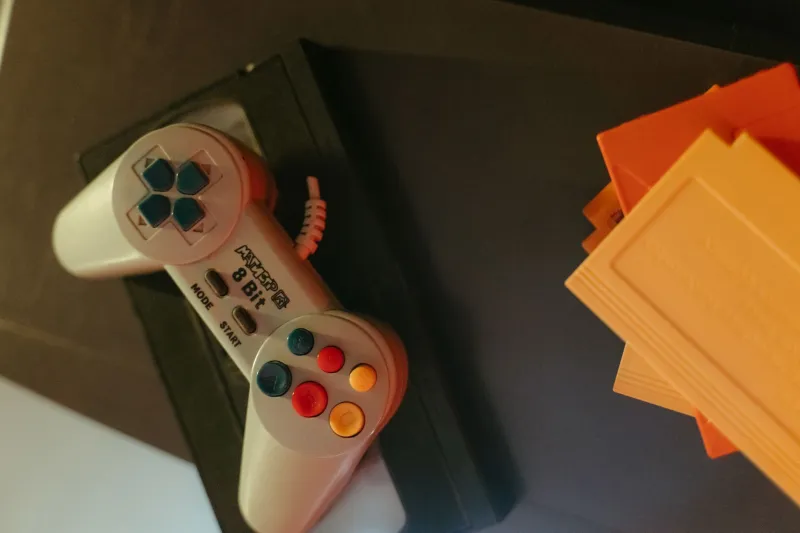
There's a moment every gamer knows. You see the logo. Maybe it's the old font, the familiar musical sting, a character silhouette you'd recognize anywhere. Your chest does something involuntary — a little leap, a warmth that shoots straight back to whatever version of yourself first fell in love with this world. And then the trailer keeps rolling, and something starts to feel... off.
By the time the release date flashes on screen, you've already pre-ordered it. Because of course you have.
That's not an accident. That's a strategy.
The Architecture of Manufactured Memory
Nostalgia is one of the most powerful emotional forces in consumer culture, and the gaming industry has spent the last decade reverse-engineering exactly how it works. It's not enough to just slap a beloved name on a new product — the really effective nostalgia plays are surgical. They use the right color palette, the right sound design cues, the right snippets of lore dropped in trailers. They know which emotional buttons to press, and they press them with precision.
The problem isn't that studios revisit old franchises. Revisiting beloved worlds can be genuinely great — when there's actual creative intent behind it. The problem is when the IP is the entire point. When the franchise name is the product, and the game underneath it is an afterthought built to a budget that reflects exactly how much the publisher actually cares.
Look at what happened to the Dungeon Keeper mobile remake back in the day. EA took a game that was beloved for its dark humor and player agency, and turned it into a predatory free-to-play grind that charged real money to speed up in-game timers. The original's spirit wasn't just ignored — it was inverted. The very thing that made players love it was stripped out and replaced with mechanics designed to exploit that love.
Retcons That Broke What Was Already Perfect
Sometimes the betrayal isn't a bad remake — it's a sequel that decides the thing you loved never really happened the way you thought it did.
Retconning is a storytelling tool that, in the right hands, can genuinely recontextualize a narrative in interesting ways. But in the wrong hands — or in hands that are primarily motivated by market research rather than artistic vision — it becomes a way to erase inconvenient history and start fresh without actually earning that fresh start.
Fans of long-running RPG franchises have felt this acutely. When a sequel rewrites the emotional consequences of choices players spent hours making, it doesn't just affect the new game — it reaches backward and damages the original experience retroactively. Suddenly the weight of those decisions feels hollow. The story you thought you were a part of turns out to have been negotiable all along.
That's a particular kind of narrative violence. It's not just bad storytelling. It's a breach of the implicit contract between a game and its audience.
The Remake Trap
Remakes exist on a spectrum. On one end, you have genuine love letters — projects where a studio clearly studied what made the original work and found ways to honor that while bringing something new. On the other end, you have asset repackaging with a fresh coat of paint and a $70 price tag.
The gaming market has seen both in recent years, and players are getting increasingly good at telling them apart — sometimes before launch, sometimes painfully after.
What makes the cynical end of that spectrum so frustrating is the transparency of it. When a beloved franchise gets a rushed remake that strips out features, downgrades the scope, and launches broken, it communicates something clearly: the publisher knew the name alone would sell enough units to justify the investment. The actual quality of the product was never really the concern. You — the fan — were the concern. Specifically, your wallet.
And the thing is, it often works. At least initially. First-week sales for nostalgia-driven releases can be massive, because that emotional pull is real and it's strong. The reckoning comes in week two, when the word of mouth catches up.
Players Are Starting to Vote Differently
Here's where things get genuinely interesting, though. The dynamic is shifting.
Gaming communities in the US and globally have gotten faster and louder at calling out cynical cash grabs. Review bombing, while imperfect as a tool, reflects a real frustration. Refund requests spike. Social media discourse turns brutal within hours of launch. And increasingly, players are making the harder choice — sitting out releases from franchises they love because they've decided their nostalgia isn't worth the price of admission.
That's actually a significant cultural shift. For years, the conventional wisdom in the industry was that established IP was essentially bulletproof — that fans would show up no matter what. That assumption is cracking. Not broken yet, but cracking.
Studios that are paying attention are recalibrating. There's a growing recognition that the goodwill attached to a beloved franchise is a finite resource, not an infinite one. You can draw from it, but if you never replenish it — if you never deliver something that genuinely earns the love rather than just borrowing it — eventually the well runs dry.
What Real Respect for Legacy Actually Looks Like
It's worth saying clearly: not every franchise revival is a cynical money grab. Some studios genuinely do the work. They bring back creative leads who understand why the original mattered. They give teams the time and budget to build something worthy. They treat the source material as a responsibility rather than a resource.
When that happens, the result is something that doesn't just satisfy nostalgia — it expands it. It adds new layers to an existing love. It makes you appreciate the original even more while standing on its own as a genuine achievement.
That's the standard. It's achievable. It just requires treating your audience as partners in something meaningful rather than targets in a revenue projection.
The Fire Cuts Both Ways
At Shining Fury, we believe that legends are built through earned trust — through the kind of storytelling and craft that makes players feel like something real happened to them. That's what the best games do. They forge something.
But fire cuts both ways. The same intensity that players bring to loving a franchise is the intensity they bring when they feel betrayed by it. And right now, a lot of gamers are carrying that burn.
The studios that figure out how to channel nostalgia into something genuinely worthy — rather than just profitable — are the ones that will still have audiences in ten years. The ones that keep reaching into that emotional well without ever giving anything back?
Eventually, the well runs dry. And no amount of clever trailer music is going to fix that.