The Music That Followed Us Out of the Game: Why Fantasy and Gaming Scores Hit Different
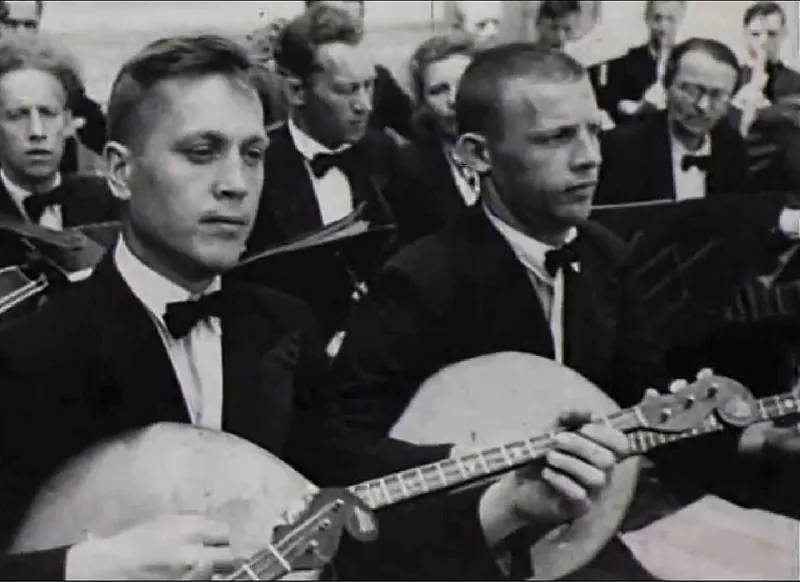
Photo: film "The Unknown War", Public domain, via Wikimedia Commons
Close your eyes for a second and think about the piece of music that immediately puts you back inside a specific game or fantasy world. Not a licensed pop song dropped over a trailer — the actual score. The orchestral swell when you finally clear a brutal encounter. The quiet, melancholic theme that played over a character's death. The main title that hit every single time the logo appeared.
You felt something just now, didn't you? That's not nostalgia doing all the work. That's a composer who built something that was genuinely, technically great — and designed it to live inside you.
Gaming and fantasy entertainment soundtracks don't get nearly enough mainstream credit. But if you're measuring emotional impact, compositional ambition, or the ability to define an entire cultural moment, the best scores from games and fantasy franchises are operating at the same level as anything coming out of Hollywood. Sometimes higher.
What a Theme Actually Has to Do
A film score has one job: support the story happening on screen. A gaming score has a wildly more complicated mandate. It has to work during combat, during exploration, during quiet character moments, during loading screens, and during cutscenes — sometimes all within the same thirty-minute stretch of gameplay. It has to loop without becoming maddening. It has to escalate without being told exactly when the player will trigger the next beat.
That's an insane compositional challenge, and the composers who crack it deserve way more recognition than they typically receive at industry award shows.
Yasunori Mitsuda's work on Chrono Trigger remains a masterclass in building emotional range across a single soundtrack. From the playful bounce of the Millennial Fair theme to the haunting, devastating weight of "Corridors of Time," Mitsuda built an emotional map of an entire game world. Players didn't just hear the music — they navigated by it. Each zone's theme told you something about where you were emotionally in the story before a single line of dialogue appeared.
That's not background music. That's architecture.
The Psychology of Why It Hits So Hard
There's real science behind why gaming and fantasy scores embed themselves so deeply. Music experienced during emotionally heightened states — the anxiety of a boss fight, the relief of a story resolution, the wonder of first stepping into an open world — gets encoded in memory differently than music you passively hear. The emotional context becomes fused with the sound itself.
This is why hearing the Legend of Zelda overworld theme as an adult can genuinely move someone who grew up playing it. The melody is carrying decades of personal emotional history. It's not just a song — it's a time machine to every afternoon spent in front of a TV trying to figure out the next dungeon. The music and the memory have become inseparable.
Fantasy television has tapped into this same mechanism with increasing sophistication. Ramin Djawadi's work on Game of Thrones — specifically the main title theme — became one of the most recognizable pieces of music on American television for nearly a decade. That opening sequence could silence a room. Not because people were waiting to see the visuals, but because the music itself had weight. It told you that something consequential was about to happen.
When a Score Defines a Franchise
Some soundtracks become so central to a franchise's identity that separating them from the experience is almost unthinkable. Koji Kondo's compositions for Super Mario and The Legend of Zelda aren't just memorable — they're functionally synonymous with the franchises themselves. Nintendo could change almost anything about those games and they'd still be recognizable. Change the music and you've broken something fundamental.
The same is true on the fantasy entertainment side. Howard Shore's Lord of the Rings score is so deeply embedded in how audiences experience Middle-earth that it effectively is Middle-earth for millions of people. The Shire theme doesn't just accompany a location — it creates a feeling of home, safety, and gentle melancholy that the visuals alone couldn't manufacture.
More recent franchises are building this kind of musical identity from the ground up with real intention. The Halo franchise understood from its first entry that the Gregorian chant-infused score was doing enormous emotional and tonal heavy lifting. It made a sci-fi shooter feel mythic. It made running across a ringworld feel genuinely heroic rather than just mechanically satisfying. Marty O'Donnell built a musical identity that players carried with them for years after finishing the campaign.
Combat Music and the Feeling of Being Legendary
There's a specific phenomenon worth calling out: the way great combat music makes you feel like a completely different person. You're not sitting on a couch anymore. You're not a person with a mortgage and a dentist appointment. You're someone who handles things.
This is intentional and it's sophisticated. Composers working on combat sequences are essentially engineering a physiological response. Faster tempos, driving percussion, brass stabs timed to hit points of anticipated player action — it's a feedback loop between the music and the player's sense of agency. When the music swells at the exact moment you land a finishing blow, your brain registers that as confirmation that what you just did was awesome.
Sonically, you've been told you're a legend. And for that moment, you completely believe it.
Games like Doom Eternal took this to an almost confrontational extreme. Mick Gordon's metal-industrial score isn't background — it's aggressive, relentless, and specifically designed to push you harder. Players reported playing better with the volume up. That's not coincidence. That's a composer understanding that music isn't decorating the experience; it's shaping player behavior.
The Scores That Outlive the Source Material
Perhaps the most remarkable thing about the best gaming and fantasy soundtracks is how they transcend their original context. Symphony orchestras across the United States now regularly sell out concert halls performing video game music. Video Games Live has toured the country for nearly two decades. The Legend of Zelda: Symphony of the Goddesses fills venues that most contemporary pop artists would be thrilled to play.
These aren't nostalgia tours for aging audiences. They're genuine celebrations of compositional craft that people of all ages show up to experience together — some who played the original games, some who never touched a controller in their lives but recognize something genuinely moving in the music.
That's the real measure of whether a score has achieved something lasting. Not whether it was technically impressive or whether it won an industry award. Whether it followed people out of the room, into their daily lives, and stayed there.
The best gaming and fantasy scores did exactly that. They burned themselves into us during the highest-stakes, most emotionally raw moments of our engagement with fictional worlds — and they've been living there ever since, waiting for the right moment to surface and remind us what it felt like to be someone worth writing music for.