Unlocked and Unleashed: How One Ability Can Flip Your Entire Game on Its Head
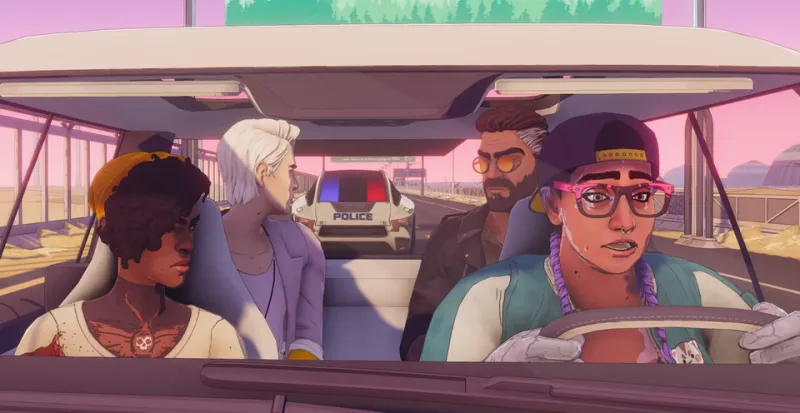
Photo: Quantic Dream, CC BY 3.0, via Wikimedia Commons
There's a specific kind of silence that happens right after it clicks.
You've been grinding through the same stretch of game for hours — maybe days. The enemies are manageable, the world is interesting enough, but something feels slightly off. Like you're playing with one hand tied behind your back and you can't quite figure out where the knot is. Then you unlock that ability. You use it once. Maybe twice. And then everything you thought you understood about the game quietly rearranges itself.
That feeling? That's not an accident. It's one of the most deliberately engineered moments in all of interactive storytelling — and when developers get it right, it's genuinely one of the most powerful things a game can do.
The Architecture of the Breakthrough
Let's talk about what's actually happening when one of these moments lands.
Good game design isn't just about difficulty curves and loot tables. It's about pacing player empowerment. The best developers — your FromSoftwares, your Naughty Dogs, your Arkanegames — understand that a player needs to feel constrained before they can feel free. You have to build the cage before you hand someone the key.
Think about the grappling hook in Sekiro: Shadows Die Twice. Early on, movement feels deliberate, almost heavy. You're locked into ground-level confrontations, forced to engage enemies on their terms. Then that grapple opens up and suddenly you're a hawk, repositioning mid-fight, escaping pressure, raining down death from above. The entire map you thought you understood becomes a completely different playground. Verticality wasn't just added — it was revealed, like it was always there waiting for you to deserve it.
That's the architecture of a great ability unlock. The world has to be designed around the absence of the power before the power arrives.
Why Your Brain Goes Haywire
From a pure psychological standpoint, these moments are dopamine delivery systems dressed up in dragon scales and particle effects.
When you've been struggling against a constraint for long enough, your brain starts treating that constraint as a fundamental rule of the universe. It stops questioning it. Then the game rips the rule away, and the cognitive dissonance is almost physical. Suddenly you're not just playing the game differently — you're seeing it differently. Old areas you cleared feel worth revisiting. Enemies you avoided now look like opportunities. The world expands without adding a single new room.
Psychologists call this kind of reframing a "schema shift" — and game designers have been pulling this trick for decades, even before they had the vocabulary for it. The Super Metroid community built an entire speedrunning culture around the moment players realize the game's physics can be exploited, not just obeyed. Wall-jumping, bomb-jumping, sequence-breaking — none of that is explicitly taught. The game trusts you to discover it. And when you do? The whole thing opens up like a flower.
The Spell That Changed Everything
RPGs might be the genre most addicted to this kind of moment, and for good reason. When your character grows, you grow. The progression is personal in a way that action games sometimes aren't.
Anyone who's played Elden Ring long enough to get comfortable with Torrent, the spectral steed, knows this feeling intimately. The early game is brutal on foot. Enemies hit hard, stamina is precious, every fight is a negotiation. Then Torrent arrives and suddenly you're kiting bosses across open fields, repositioning in ways that felt impossible twenty minutes ago. It doesn't trivialize the game — it transforms your relationship with it.
Or take something more niche: Hollow Knight's Mothwing Cloak. The game starts you off with limited mobility, and the underground world of Hallownest feels genuinely claustrophobic. That dash ability doesn't just help you dodge — it rewrites the geometry of every room you've already been in. You start looking at walls differently. Gaps that seemed impassable suddenly look like invitations.
This is the magic trick: the ability doesn't just change what you can do. It changes what you notice.
Developers Know Exactly What They're Doing
Here's the thing — none of this is accidental. When a studio like Nintendo designs a Zelda dungeon, the whole structure is built backward from the tool you'll find inside it. The hookshot isn't just a reward. It's a key that retroactively unlocks every room you passed through before you had it. The dungeon was always a puzzle about the hookshot. You just didn't know it yet.
This design philosophy — sometimes called "Metroidvania" structure after the two franchises that perfected it — is fundamentally about narrative pacing through mechanical empowerment. You're not just getting stronger. The story of your character's growth is being told through what you can suddenly do. No cutscene required.
And when developers nail the timing? It's some of the best storytelling in the medium. The moment in Control when Jesse Faden unlocks the Launch ability and starts hurling debris at enemies doesn't just feel powerful — it feels like a character beat. She's not just surviving anymore. She's commanding.
The Ripple Effect on the Rest of the Story
Beyond the immediate rush, these ability unlocks do something sneaky to the overall narrative experience. They act as soft chapter breaks — psychological markers that divide your playthrough into "before" and "after."
Ask anyone who's played Hollow Knight when they started feeling like a real threat in that world. Most people won't cite a story moment. They'll cite an ability. The Nail upgrades. The Shade Soul spell. The moment their dash got a second charge. The game's emotional arc isn't just written in its lore — it's embedded in its mechanics.
That's genuinely remarkable when you think about it. A few hundred lines of code and some animation frames are carrying the same narrative weight as a three-act screenplay.
The Fire That Keeps Burning
At Shining Fury, we talk a lot about the moments where legends get forged. Usually we mean big story beats, epic boss fights, the kind of cinematic stuff that makes you put the controller down and stare at the ceiling. But some of the most legendary moments in gaming happen quietly — in the split second between pressing a button for the first time and realizing the game you thought you were playing is gone.
The ability unlocked. The cage opened. And everything got brighter.
That's the real power of great game design. It doesn't just give you tools. It makes you feel, for one perfect moment, like you earned them. Like the whole world was always waiting for you to be ready.
And honestly? That feeling never gets old.